


 Email the author
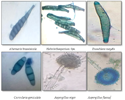
Study of mycotoxins from wheat grains from the Thakur Village Market, Kandivali, Mumbai, India
Abstract
Keywords
Full Text:
PDFReferences
Abass A. B., G. Ndunguru, P. Mamiro, B. Alenkhe, N. Mlingi and M. Bekunda. Post-harvest food losses in a maize-based farming system of semi-arid savannah area of Tanzania.” 57, (2014): 49–57.
Aiko, Visenuo & Alka Mehta. Occu-rrence, detection and detoxification of mycotoxins. Journal of Biosciences. 40 (2015), 10.1007/s12038-015-9569-6.
BARI. 1988. Bangladesh Agril. Res. Inst. P. Path. Div. Annual Rept. (1987-88) PP.
Betina, Vladimir. Chromatography of Mycotoxins – Techniques and Appli-cations. Journal of Chromatography Library, Volume 54, (1993).
Commission of the European Communities.” Off. J. Europ. Comm. L 102, (1976).
Donner. Bread-making quality of wheat: A Century of Breeding in Europe. Kluwer Academic Publisher, London, (2000).
Doyer. Manual for Determination of Seed – borne Disease. (1938).
Egmond, H.P. van, W. E. Paulsch, E. Deijll and P. L. Schuller. J. Assoc. Off. Anal. Chem., 63, (1980): 110.
Ellis, M. B. “Mycol. Pap.” 106, (1966):34.
Eppley, R. M. Food Agriculture Organization of the United nations, Recommended Practices for the Prevention of Mycotoxins. J. Assoc. Off. Anal. Chem., Rome 49, 1218, (1966): 53 - 55.
Garcia, M. J. de M., M. A. M. Biaggioni, W.A. Fer reira, E. Y. Kohara and A. M. De Almeida. Sucessão de espécies de fungos em milho armazenado em sistema aerado. Revista Brasileira de Armazenagem, 27 (2003): 14 - 22.
Halt, M. Molds and Mycotoxins in herb tea and medicinal plants. European Journal of Epidemiology 14, (1998): 269 – 274.
Hasan Ayciceka, Abdurrahman Aksoy and Sahan Saygi. Determination of aflatoxin levels in some dairy and food products which consumed in Ankara, Turkey. Food Control, Volume 16, Issue 3, (2005): Pages 263 – 266, Elsevier.
Ismaiel, Ahmed A. and Jutta Papenbrock. Mycotoxins: Producing Fungi and Mechanisms of Phytotoxicity. Agriculture: 5, (2015), pp. 492-537.
Jemmali, M. Physical and Chemical Measurement of Mycotoxins; especially aflatoxins (in Italian). Ind. Aliment. 16 (1977): 116 – 117.
Juan C, A. J. C. Moito Zinedine, L. Idriss and J. Manes. Aflatoxin levels in dried fruits and nuts from Rabat Sale area, Morocco. Food Control, 19, (2008): 849 – 853.
Kienneier, F. D. Groll and Z. Lebensmitt. – Untersuch., 142, (1970): 120.
Knutsen, H., J. Alexander, L. Barregard, M. Bignami, B. Brüschweiler, and L. Edler. Risks to human and animal health related to the presence of deoxynivalenol and its acetylated and modified forms in food and feed. EFSA Journal, 15, (2017): pp 4718.
Lazzari, F. A. Umidade, fungos e micotoxinas na qualidade de sementes, grãos e rações. Curitiba. (1997): 148p.
Luz, C., F. Saladino, F. B. Luciano, J. Mañes, & G. Meca. Occurrence, toxicity, bio-accessibility and mitigation strategies of beauvericin, a minor Fusarium mycotoxin. Food and Chemical Toxicology, 107, (2017): 430 – 439.
Mixon, A. C. Differences among lines and varieties of corn in susceptibility to damage from invasion by storage fungi. Phytopathhology, 61, (1971): 1498 - 1500.
Munkvold L., R. Kjoller, M. Vestberg, S. Rosendahl and I. Jakobsen. High functional diversity within species of arbuscular mycorrhizal fungi. New Phytologist 164, (2004): 357 – 364.
Nishik, Y. and C. Miyake. Helmintho-sporium Spp. Ber. Ohara Inst. Landw. Biol. (1926): 243.
Paulsch, W. E., H. P. van Egmond, and P. L. Schuller. In: Proc. Vth Int. IUPAC Symp. Mycotoxins and Phycotoxins, Vienna, Austria. September, (1982): p. 40.
Patterson, D. S. P. and B. A. Roberts. J. Assoc. Off. Anal. Chem., 62, (1979): 1265.
Raper, K. B. and D. I. Fennell. The Genus Aspergillus. Baltimore, Wiliams and Wilkins Co. (1965): 10 + 686 p.
Santos, J. P. Métodos preventivos de controle de pragas de grãos armazenados In: Lorini, I., Miike, L.H., Scussel, M.V. (Eds). Armazenagem de grãos.Campinas, IBG, (2002) p. 399 - 441.
Schuller P. L., C. A. H. Verhulsdonk and W. E. Paulsch. Pure Appl. Chem. 35, (1973): 291.
Scudamore, K. A. Identifying Mycotoxins is Paramount in the fight against their spread. World Grain 23, (2005): 36 - 39.
Scusse, V. M. Fungos e micotoxinas associados a grãos armazenados. Fungal and mycotoxins associated to storage of grains. In: Armazenamento de Grãos. Storage of Grains. Lorini, I., V. M. Scussel, and H. L. Miike. (Eds.) São Paulo: Ed. Chap. 9.3, IBG, (2002): 675 - 787.
Subram, B. L. & Y. Jain (Nishik & C. Miyake). Drechslera maydis. Current Science, 35 (14), (1966): 354.
Thom. Bull. Bur. Anim. Ind. US Dep. Agric. 118, (1910): 58.
TaianaD enardi de Souza, Sergiane Souza Caldas, Ednei Gilberto Primel and Eliana Badiale Furlong. Exposure to deoxynivalenol, Ht-2 and T-2toxins by consumption of wheat-based product in southern Brazil. Food Control, Volume 50, (April 2015):789-793.
Trucksess, M. W. and A. E. Pohland. Mycotoxin Protocols. FDA, (2000).
Uday Prakash, N. K. Indoor Molds – Isolation and Identification. Color Wings (M) Pvt. Ltd. Chennai, India. (2004).
Vanhoutte, I., K. Audenaert & L. De Gelder. Biodegradation of mycotoxins: Tales from known and unexplored worlds. Frontiers in Microbiology, 7, 5, (2016): 61.
Ware, G. M. Mission Report: Inspection, Sampling and Analyses of Maize and Groundnuts for Aflatoxin. UNDP-FAO-THA-82-004 Reduction of Postharvest Losses in Stored Grains (1986):27 pp.
Widstrom, N. W., D. M. Wilson, W. W. McMillan. Ear resistance of maize inbreds to field aflatoxin contamination. Crop. Sci., 24, (1984): 11545 - 1157.
Woolf, L. I. The heterozygote advantage in phenylketonuria. (Letter) Am. J. Hum. Genet. 38: (1986) 773-775.
World Health Organization. “Food irradiation: A technique for preserving and improving the safety of food.” Geneva, (1988).
Zuber, M. S., O. H. Clavert, W. F. Kwolek, E. B. Lillehoj & M. S. Kang. Aflatoxin production in an eight-line dialler of Zea mays infected with Aspergillus flavus. Phytopathology, 68, (1978): 1346 - 1349.
DOI: https://doi.org/10.5281/aps.2020.9.4.5

Copyright (c) 2020 Annals of Plant Sciences

This work is licensed under a Creative Commons Attribution-NonCommercial-NoDerivatives 4.0 International License.

